Something I learned throughout this journey is that all fear is not created equal. The medieval era anchorite and contemplative Julian of Norwich described four different types of fear: the fear of attack, the fear of punishment, fear that comes from doubt, and fear that springs forth from reverence. While the first three may serve a purpose in the human life, it is only the fourth that is to be valued and commended.
As discussed in the last post, throughout the Old Testament we are given glimpses of those who interacted with God; Moses, Isaiah, Ezekiel, Elijah (etc.)—all of them trembled in fear and reverence before the Holy God. This is a fear that is right and good—because He is a God who is not “safe,” but who is infinitely good.
But there’s another kind of fear; a fear that contradicts the promises of God and challenges our trust in His Goodness. It’s a fear that whispers to our hearts that maybe God isn’t who He has promised to be for us. This is what Julian of Norwich described as a fear that comes from doubt. If we’re honest, don’t we all wrestle with this kind of fear at least from time to time?
- We fear that our needs won’t be provided for
- We fear that we won’t be protected
- We fear that we won’t be loved or cared for
- We fear that we’ll be abandoned or forgotten
Maybe we don’t always feel these fears at a visceral level. Or maybe we’re unwilling to admit that we ever feel this way, because it conflicts with our stated theology and may cause us to appear weak in our faith. But how often do our lives reveal them lurking beneath the surface?
- [We fear that our needs won’t be provided for, so] we work ourselves into the ground, hoarding away our resources.
- [We fear that we won’t be protected, so] we live guarded and careful lives—both emotionally and physically.
- [We fear that we won’t be loved or cared for, so] we grasp for the affection of the people around us and compromise our identity for the sake of being loved.
- [We fear that we’ll be abandoned or forgotten, so] we strive to make ourselves important, to make a name for ourselves and leave a legacy that we’ll be remembered for.
And apart from the promises of God, these fears are probably very good and helpful! One look at our daily feed of news is enough to strike existential dread into our hearts — only most of us have probably grown somewhat numb to it after years of being exposed to the pain and heartbreak that exists in our world. We live in a world where we are surrounded by war, hunger, lack of resources, natural disaster, division, and evils of every kind. Fear is a very natural human response to these realities, and indeed a mechanism of our very survival.
But, as Dallas Willard puts it in his book “The Divine Conspiracy”:
“Jesus brings the assurance that our universe is a perfectly safe place for us to be.”
Do you believe that? More importantly, does your life reflect it?
It’s a statement not based on denial of the harsh realities of our world, but on the truth of who God is to us and for us.
Willard goes on to explain that this assurance “can only be supported on a clear-eyed vision that a totally good and competent God is right here with us to look after us” (p. 67).
When we see God rightly, we will see the world differently.

The antidote to fear in the Christian life is not to “be brave” or confident in our own abilities to look the object of our fear in the eye and keep our knees from knocking. The antidote to fear is to place our trust in who God has revealed Himself to be — a God who is not safe, but who is good.
But here’s the thing — it’s one thing to know that in your mind, it’s another thing to trust it. To rest all the weight of your life upon it.
We often talk about trust as if it’s just a mental thing, a decision that we make or an idea that we consent to. But trust only becomes real and concrete when we rest our weight on it in reality. I can say that I believe that my car will start, but I exercise trust every time I slide into the driver’s seat and turn the key in the ignition. I can say that I believe that the chair I’m sitting on as I write this is strong enough to hold my weight—but just saying that I believe that isn’t going to solve the problem of my tired legs. I have to trust it enough to actually sit down on it. I can say that I believe that my friend will keep things I share with her in confidence, but I exercise trust when I actually tell her something deeply personal. Belief is something we decide. Trust is what we do with it.
The apostle James writes about the relationship between faith and deeds. It’s a passage that often comes up in discussion about faith vs. good works as if the two were separate things somehow at odds with each other. The discussion often centers around the reformer Martin Luther’s affirmation of sola fide and sola gratia—that salvation is by faith alone and by grace alone and not dependent on our good works to earn God’s forgiveness and love. So what, then, do we do with James’ words, “In the same way, faith, by itself, if it is not accompanied by action, is dead […] As the body without the spirit is dead, so faith without deeds is dead” (James 2:17, 26).
I’ve always viewed this discussion of the relationship between faith and works as being about our good works as a next—but separate—step to “prove” our faith to God and others. The two are connected but distinct. But what if the connection is much more basic and intertwined than that? What if our actions and deeds are not things we add to our faith as the next step in the journey, but things that inherently reveal where our faith—and consequently our trust—really is?
“But someone will say, ‘You have faith; I have deeds.’ Show me your faith without deeds, and I will show you my faith by my deeds. You believe that there is one God. Good! Even the demons believe that—and shudder.”
What we claim to know and believe means nothing if it is not reflected in action. I love how Sam Allberry puts it in his book James for You:
“Our claims are not always an accurate reflection of what we really think and believe—but our deeds are. We do not always live what we say we believe—but we do always believe what we live out.”
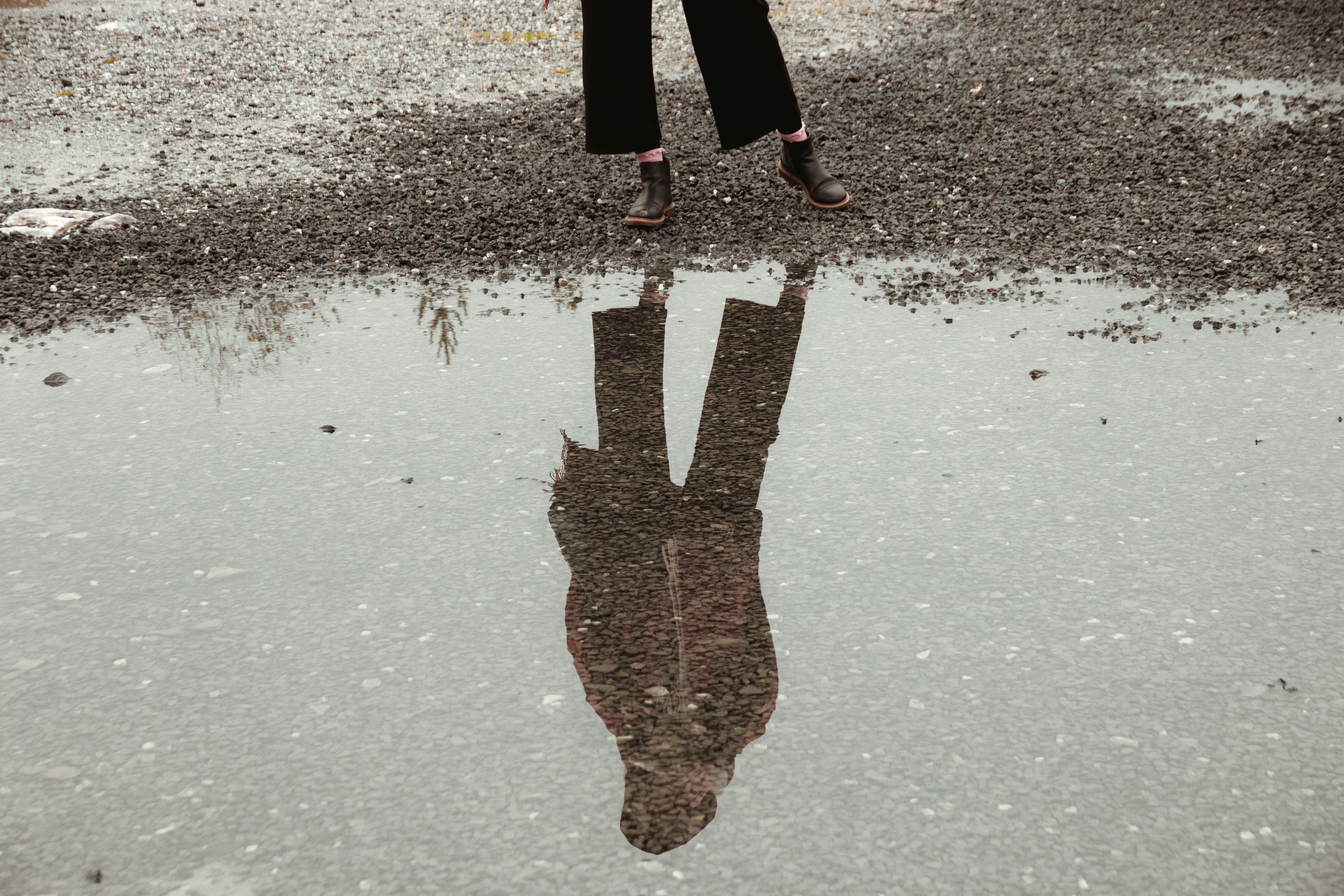
Our faith has not fully penetrated our hearts and lives until we have placed our full weight upon it—until we live like it’s really true. There is a tender balance here, especially for those (like myself) who have a propensity toward a “works-based righteousness.” Rather than seeing our deeds as another box on the spiritual checklist of salvation, I’ve come to see them as a mirror reflecting back to us the condition of our hearts. When what we see reflected back to us does not match up with our stated beliefs, it presents us with an opportunity. Not for a shame driven push to “do better,” but an invitation to come to God with the humility and desperation demonstrated by the man in the Gospel narrative who cried out to Jesus with these powerful words: “I do believe, help me overcome my unbelief” (Mark 9:24). It is the work of God in our lives that helps us to know Him in such a way that our lives are changed inwardly and outwardly.
And our outward lives as Christians are not only a mirror reflecting where our faith and trust really rest, but also the training grounds where we practice our trust and strengthen our faith.
- We fear that our needs won’t be provided for, but God’s Word says that He will supply all our needs according to His wisdom and power (Philippians 4:19)… so we live generously with our resources and practice sabbath rest.
- We fear that we won’t be protected, but God’s Word says that not even a sparrow—compared to which we are much more valuable to God—can fall outside of God’s care (Matthew 10:29-31)… so we live with a willingness to take risks and go wherever the Lord calls us, even when it contradicts worldly wisdom and advice.
- We fear that we won’t be loved or cared for, but God’s Word says that He so loved us that He gave His only Son so that we could become children of God and be with Him forever (John 3:16; 1 John 3:1)… so we live our lives grounded in our true identity as those immeasurably loved by God and refuse to let anyone or anything tell us that we must perform or conform in order to be loved.
- We fear that we’ll be abandoned or forgotten, but God’s Word says that He is with us and that He will never leave or forsake us, and that He has a wonderful inheritance for us (Isaiah 41:10; Deuteronomy 31:8; 1 Peter 1:3-4)… so we live not for worldly accolades and power, but humbly seek to advance God’s kingdom.
With God’s help, we live it out because we believe it. And as we live it out, we get to see God’s faithfulness and trustworthiness not just as an abstract idea but as a rock solid reality in our lives. And through this cycle, the roots of our faith and trust grow deeper and deeper.
As I wrestled with fear during that season—and in the months and years that followed—I tried to deny it, ignore it, and overcome it by my own strength and rationalizations. But those efforts were powerless to bring true relief and peace. And that is because—at the risk of repeating myself—the antidote to fear is to place our trust in a God who is not safe, but who is good. That trust is the core lesson that God taught me through that season, and continues to teach me day by day—one I imagine He’ll keep teaching me for the rest of my life. And that’s not entirely because I’m hard headed (though that may be true as well), but because it is such a complex issue that finds expression in innumerable ways. It’s not a “one and done” matter. Trust is not an object in itself, something that I can possess or obtain. It is a verb. I don’t merely have trust, I have trust in something or someone. And trusting in God manifests itself in innumerable ways that I will continue learning throughout my entire life.
May we trust in the Lord not only in word but in deed, and may our trust in God form our firm foundation in a fearful and fear-filled world.
 Paramutheomai