One of the challenges that I faced in my season of fear is that — especially within the Christian faith — fear can be a bit of a complicated subject. First there are the hundreds of verses that tell us not to fear. I am well acquainted with these verses, I even have one tattooed on my arm:
So do not fear, for I am with you; do not be dismayed, for I am your God. I will strengthen you and help you; I will uphold you with my righteous right hand. – Isaiah 41:10
Then there are the many verses that commend something commonly referred to in Christian circles as the fear of the Lord:
- The fear of the LORD is the beginning of wisdom (Proverbs 1:7a)
- Fear the LORD, you his holy people, for those who fear him lack nothing (Psalm 34:9)
- Blessed is the one who always trembles before God, but whoever hardens their heart falls into trouble (Proverbs 28:14)
- Oh, that their hearts would be inclined to fear me and keep all my commands always, so that it might go well with them and their children forever! (Deuteronomy 5:29)
- Do not be afraid of those who kill the body but cannot kill the soul. Rather, be afraid of the One who can destroy both soul and body in hell (Matthew 10:28)
- His mercy extends to those who fear him, from generation to generation (Luke 1:50)
The overarching message of Scripture is pretty clear — the only thing truly worthy of our fear is God Himself.
But there’s another well known verse about fear, one that I have often found particularly challenging:
There is no fear in love. But perfect love drives out fear, because fear has to do with punishment. The one who fears is not made perfect in love. – 1 John 4:18
If the fear of the Lord is a thing to be commended, why would the absence of fear be a good thing? If we are to fear God, and if God is Love (1 John 4:8) how can there be no fear in love?
In the children’s book series “The Chronicles of Narnia” C.S. Lewis paints a picture of a magical world that exists outside of time and space as we know it, complete with talking animals. It’s a world called Narnia. In Narnia there is a character named Aslan, a lion who functions as the Christ figure throughout the story. Nearly all of the books in the series involve human children entering into Narnia, where they have adventures, learn lessons, and come face to face with Aslan. Throughout these stories Lewis so wonderfully highlights aspects of the human condition and the nature of our relationship with God.
In what is probably the most famous book of the series—“The Lion, the Witch and the Wardrobe”—the key human figures of the series find themselves in Narnia for the first time. The Pevensie siblings—Susan, Peter, Edmund, and Lucy—enter into a world of perpetual winter being ruled by an evil witch called the White Queen, who keeps the world a frozen wasteland and turns her enemies to stone. Near the beginning of the story, the children encounter a couple of talking beavers who begin to tell them about a mysterious figure named Aslan:
‘Who is Aslan?’ Asked Susan.
‘Aslan?’ Said Mr. Beaver. ‘ Why, don’t you know? He’s the King. He’s the Lord of the whole wood, but not often here, you understand. Never in my time or my father’s time. But the word has reached us that he has come back. He is in Narnia at this moment. He’ll settle the White Queen all right. It is he, not you, that will save Mr. Tumnus.’
‘She won’t turn him into stone too?’ Said Edmund.
‘Lord love you, Son of Adam, what a simple thing to say!’ Answered Mr Beaver with a great laugh. ‘Turn him into stone? If she can stand on her two feet and look him in the face it’ll be the most she can do and more than I expect of her’ […]
‘Is—is he a man?’ Asked Lucy.
‘Aslan a man!’ Said Mr. Beaver sternly. ‘Certainly not. I tell you he is the King of the wood and the son of the great Emperor-beyond-the-Sea. Don’t you know who is the King of Beasts? Aslan is a lion—the Lion, the great Lion.’
‘Ooh!’ Said Susan, ‘I’d thought he was a man. Is he—quite safe? I shall feel rather nervous about meeting a lion.’
‘That you will, dearie, and no mistake,’ said Mrs. Beaver; ‘if there’s anyone who can appear before Aslan without their knees knocking, they’re either braver than most or else just silly.’
‘Then he isn’t safe?’ Said Lucy.
‘Safe? Said Mr. Beaver; ‘don’t you hear what Mrs. Beaver tells you? Who said anything about safe? ‘Course he isn’t safe. But he’s good. He’s the King, I tell you.’
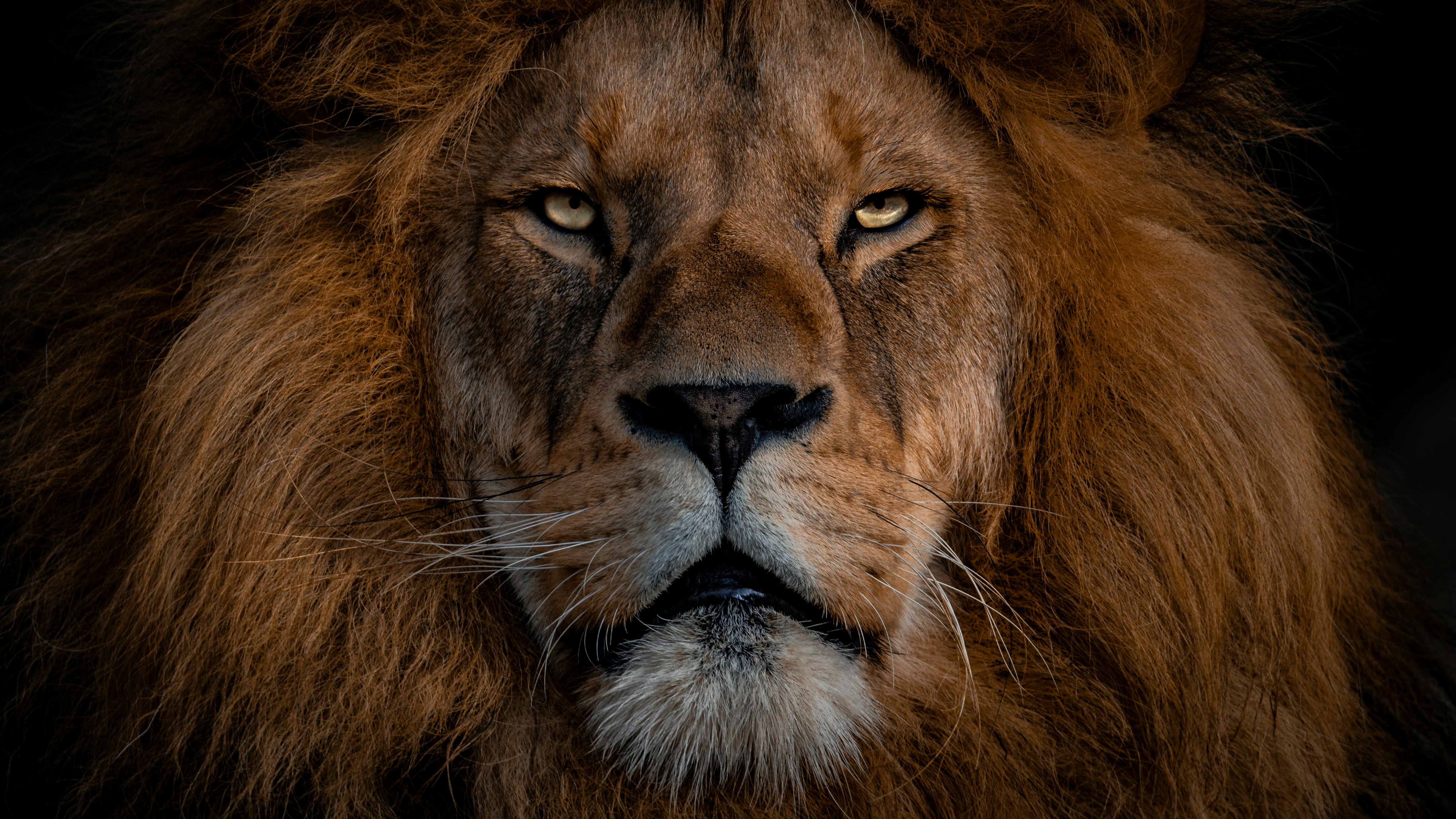
It is no accident that Lewis uses the image of a lion to depict this character. Beyond allusions to biblical references such as the “Lion of Judah”, Lewis chooses imagery that would strike a level of fear into the heart of any reasonable person. If you tell me that you could come face to face with a lion and not be afraid, I would call you either a liar or insane.
At least in my experience, we don’t always know what to do with that. If our posture before God is not to be one of fear, then the temptation is to bring God down to our level and convince our hearts that there is no reason to fear Him. It is to make Him small and soft, to emphasize His love—but a version of love made in our own image rather than His. We project onto God a love that is soft and superficial, accommodating without standards or truth. Perhaps in a reaction to “fire and brimstone” preaching that emphasizes the wrath of God against sinners, the pendulum seems to have swung to the other extreme. We’ve emphasized the Lord as our friend, seeking to make Him more approachable and “safe.” But the moment that we think of the Lord and do not feel a holy fear in our hearts is the moment we have failed to see Him as He truly is. It is a sign that we have crafted a false god that appeals only to our sense of safety and comfort. So what must be parsed out is that fear itself is not the issue, misplaced fear is. When we see God rightly—as He has revealed Himself to humanity—there is a level of holy fear that we should experience.
Then there is the temptation to interpret this verse in a condemning manner: If I fear, it means I must not know God. Now I do believe that there is an element of truth in that, and it’s one of the most important lessons that God taught me in that season of intense fear as He began to reveal and dismantle the distortions in my perception of God and the way that I related to Him. So while there is truth in that interpretation, it focuses on the wrong thing—it focuses on fear as the problem to be overcome rather than the symptom pointing to the deeper distortion in our knowledge and perception of God. It focuses on the fear rather than on God’s love that casts out fear; a focus that leads to a performative mindset where the eradication of fear is something that must be accomplished in order to be right with God, rather than a byproduct of knowing God as He truly is.
But I don’t think the call here is to either of those things. The call is not to conquer our own fear or to make the Lord one who is undeserving of fear. I believe that the call is to know and to trust in a love so powerful that it lifts us ABOVE the fear; a love that raises us up, that saves us from our sinful and fallen condition that rightly trembles before the Holy One of Israel. It is a love that does not negate fear but overcomes it by the blood of Jesus Christ our Savior. It does not make God “small,” He remains Holy—a God worthy of our fear, our awe, our worship and our devotion. And it does not make us those who overcome on our own merit, climbing up to reach God. We are simply those who know a love strong enough to conquer sin, death, and fear, and make us right with God.
God’s love was revealed among us in this way: God sent His only son into the world so that we might live through Him. In this is love, not that we loved God but that He loved us and sent His son to be the atoning sacrifice for our sins. – 1 John 4:9-10
May we revel in the amazing love of God revealed in Christ Jesus that sets us free from the bondage of fear and makes us right with Him.
 Paramutheomai